
Apprentice’s June Blog
Apprentice update, from river safety and fish surveys to traditional skills and careers events
This month our apprentices have been putting their training into practice, from pesticide safety and electrofishing to traditional countryside skills and inspiring young people at careers events. Their experiences continue to build practical skills, confidence and a deeper understanding of conservation work.
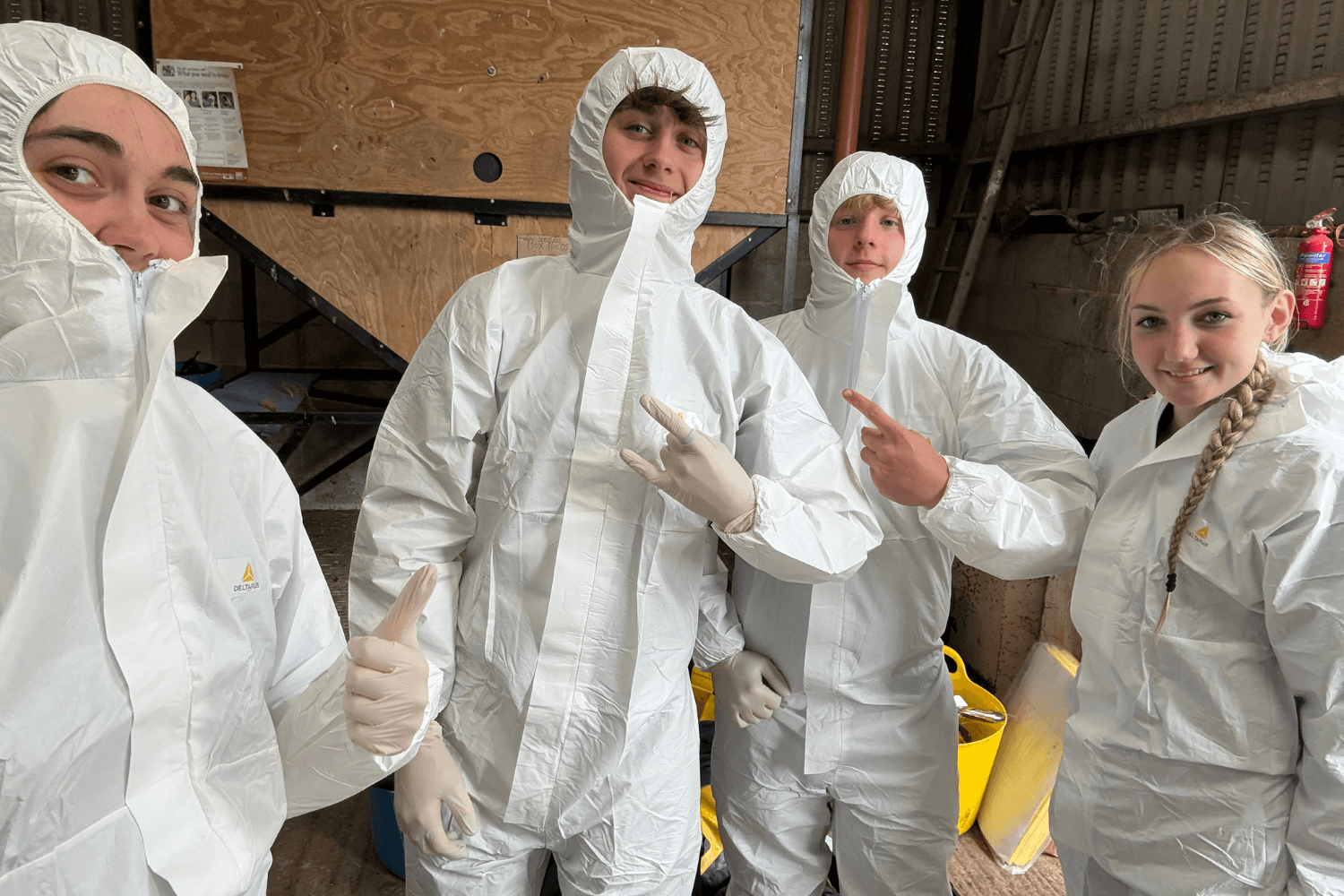
Georgia undertaking her ‘safe use of pesticides’ qualification
Georgia
This month I completed the final ticketed course of my apprenticeship, the Safe Use of Pesticides qualification. Over three days I learned about the legislation surrounding pesticide use, how to assess environmental risks, particularly near watercourses, and the importance of considering alternative methods before using chemicals. Although the theory was challenging at times, the practical sessions using spraying knapsacks were a real highlight and gave me a new appreciation for the skill involved in safe pesticide application. Thankfully I passed the assessment, and with summer approaching I’ll soon be putting this training into practice to help manage invasive species across the catchment.
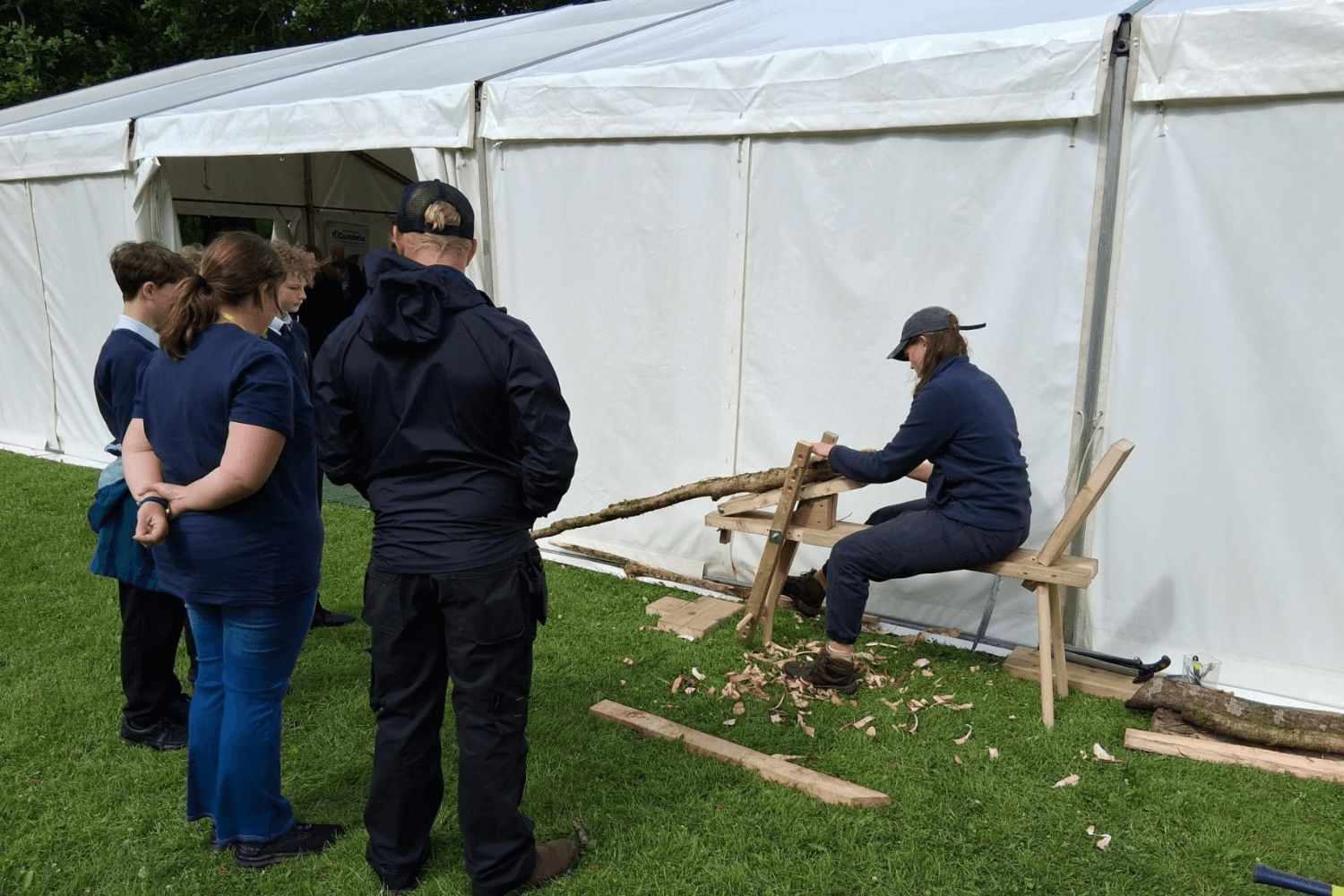
Rown and the other Apprentices learning skills
Rowan
This month I took part in a schools careers day where we spoke to pupils about our apprenticeships and the work we do at West Cumbria Rivers Trust. I helped demonstrate traditional scything, including peening and shaping the blade, and explained some of the benefits compared with modern strimmers, such as less noise and vibration, no petrol or oil, and reduced disturbance to wildlife. We also demonstrated a shaving horse that we had made for shaping cleft wood fencing materials, which sparked lots of interest and conversation.
Overall, I really enjoyed the day and found it rewarding to share practical conservation skills with the public and encourage interest in conservation work.
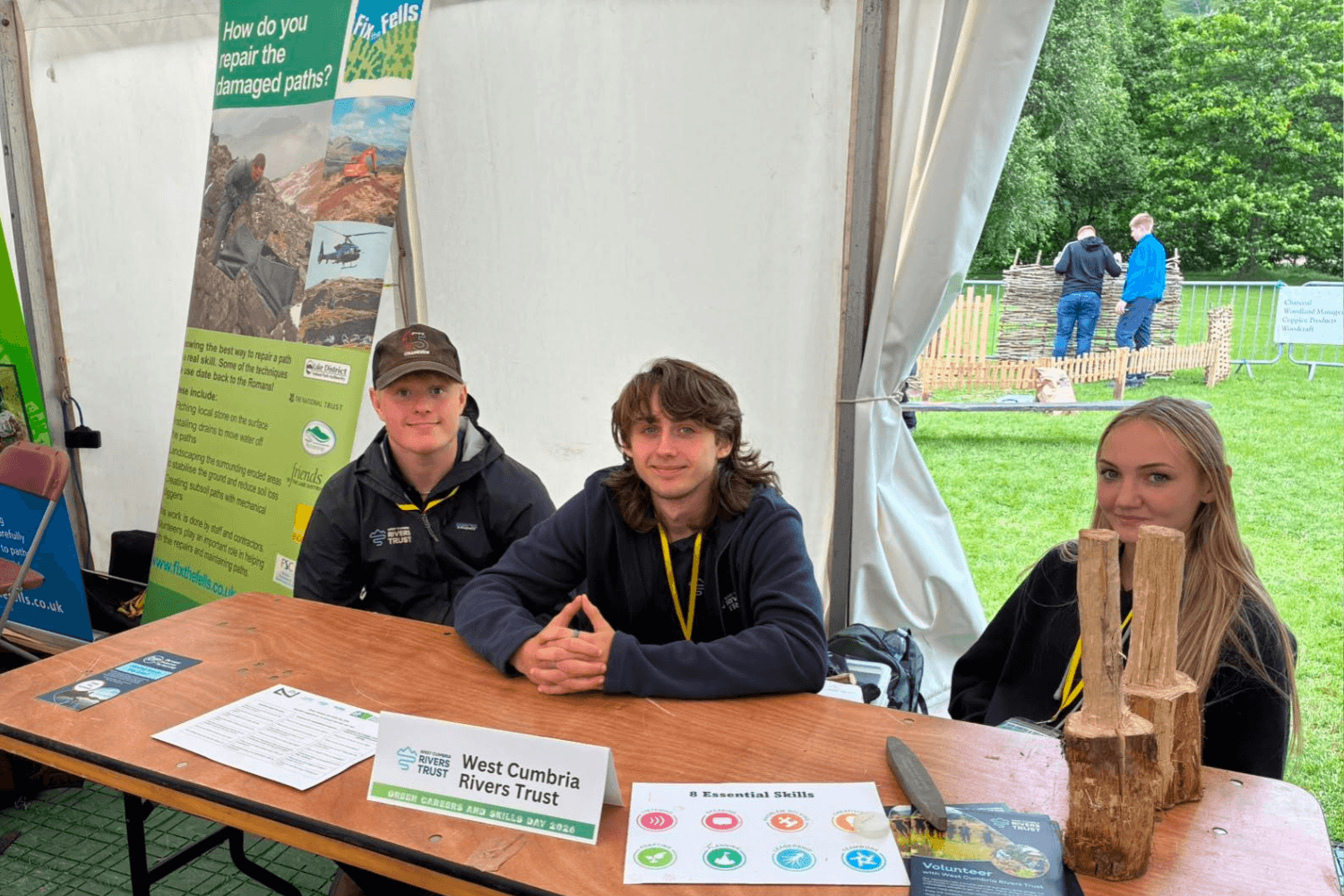
Brooke at the Green Careers Skills Day
Brooke
This week I attended the Green Careers Skills Day at Grasmere, where we met secondary school students to introduce them to the wide range of careers available in the countryside, conservation and environmental sectors.
Throughout the day, I spoke to lots of different groups about what it's like to be an apprentice with West Cumbria Rivers Trust. I explained how my apprenticeship combines practical conservation work with training, and talked about the different types of jobs we carry out throughout the year. I also shared some of the skills I've developed so far, including woodland management, habitat improvement, fencing, path maintenance, and using a variety of hand tools and machinery.
Many of the students were interested in what a typical working day looks like, how I got into the apprenticeship, and the opportunities it could lead to in the future.
One of my favourite parts of the day was demonstrating a peening pony (a traditional woodworking tool used to split and prepare green wood) and a shaving horse (a traditional woodworking bench that holds timber securely while it is shaped by hand using tools such as a draw knife) alongside the other apprentices. We built both pieces of equipment ourselves during our training, so it was rewarding to show students how they're used and explain why traditional woodland tools are still important in conservation work today.
The event also helped me develop my own communication skills. Speaking to so many different people built my confidence and gave me more experience explaining practical conservation work in a way that was easy to understand. It was also a great opportunity to represent WCRT and share what I've learned during my apprenticeship.
Overall, I really enjoyed the day. It was rewarding to encourage young people to think about careers in conservation while demonstrating some of the practical skills we've developed. Hopefully we inspired a few future conservationists along the way.
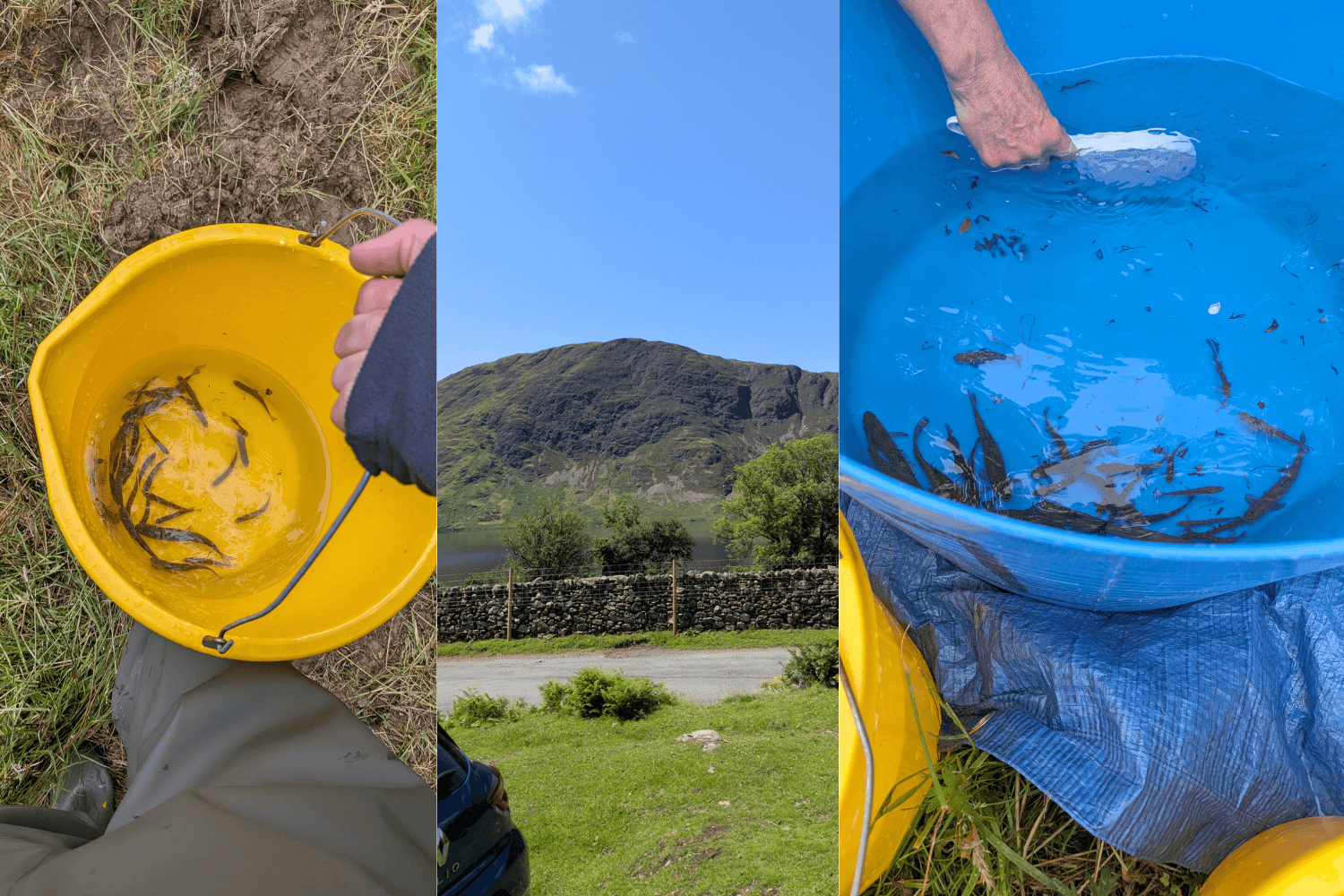
Daniel undertaking electrofishing surveys
Daniel
I spent the week electrofishing across a range of becks and small streams. While every survey site was different, one thing remained constant - the hot weather.
Although the sunshine made for some long, tiring days carrying equipment between sites, standing in the water for much of the work did help to take the edge off the heat. Before each survey, our team also monitored the water temperature to make sure conditions were suitable for electrofishing. If rivers become too warm, fish can become stressed, so surveys are postponed to avoid causing them any additional harm.
Each survey involves catching fish before carefully measuring and identifying the salmonids, with all the information recorded on tally charts. The team also measure the length and width of each survey site to ensure accurate records can be collected.
One of the highlights of the week was working alongside the Trust's interns. It made the days a lot more fun. We had a laugh while still getting all the work done, which made the long, hot days go a lot quicker.
Once all the data had been collected, we carefully returned the fish to the beck, watching them swim safely back into their habitat. This is one of my favourite parts of the job. I'm happy to be e-fishing again as I love fish in general, especially trout.