
Apprentice’s July Blog
Apprentice update, from electrofishing and riverbank habitat restoration to boardwalk construction and multi-year conservation impact
This month, our apprentices have been out in full force across the catchment - from surveying fish and planting native reeds to constructing sleeper boardwalks and delivering late-season balsam bashing. Their hands-on work is building vital practical skills while creating lasting, visible improvements for West Cumbria's rivers and communities.
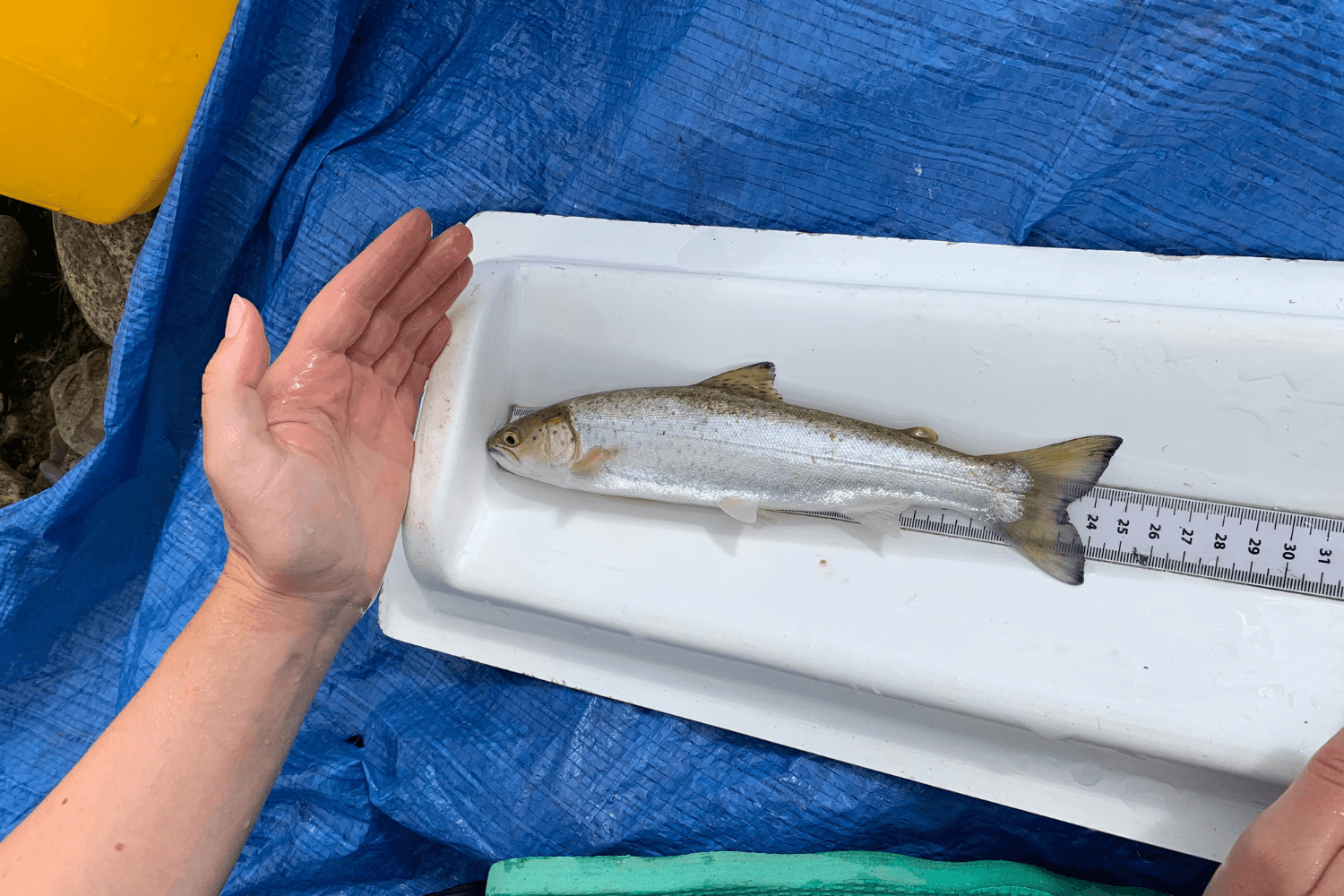
Georgia has been e-fishing with the team over the summer months
Georgia
We’re now halfway through the e-fishing season and, after a slow start due to high water temperatures, we’re finally back in full swing. I’ve been assisting the team several times a week since July and, despite the occasional forgotten bit of equipment (sorry Laura!), the surveys are starting to feel like a well-oiled machine.
My fish ID skills have come on a lot since last season, and I’m much more confident handling and measuring fish. We’ve caught plenty of beautiful trout and salmon so far, including a 25cm adult salmon in the lower Derwent this week, but the humble stone loach is still my favourite!
It’s also been great exploring different parts of Cumbria and getting to know the catchment better. Alongside the e-fishing, we’re still tackling Himalayan balsam with our brilliant volunteers. With only a few weeks before the seed heads appear, hopefully we can make good progress at some of the major source sites.
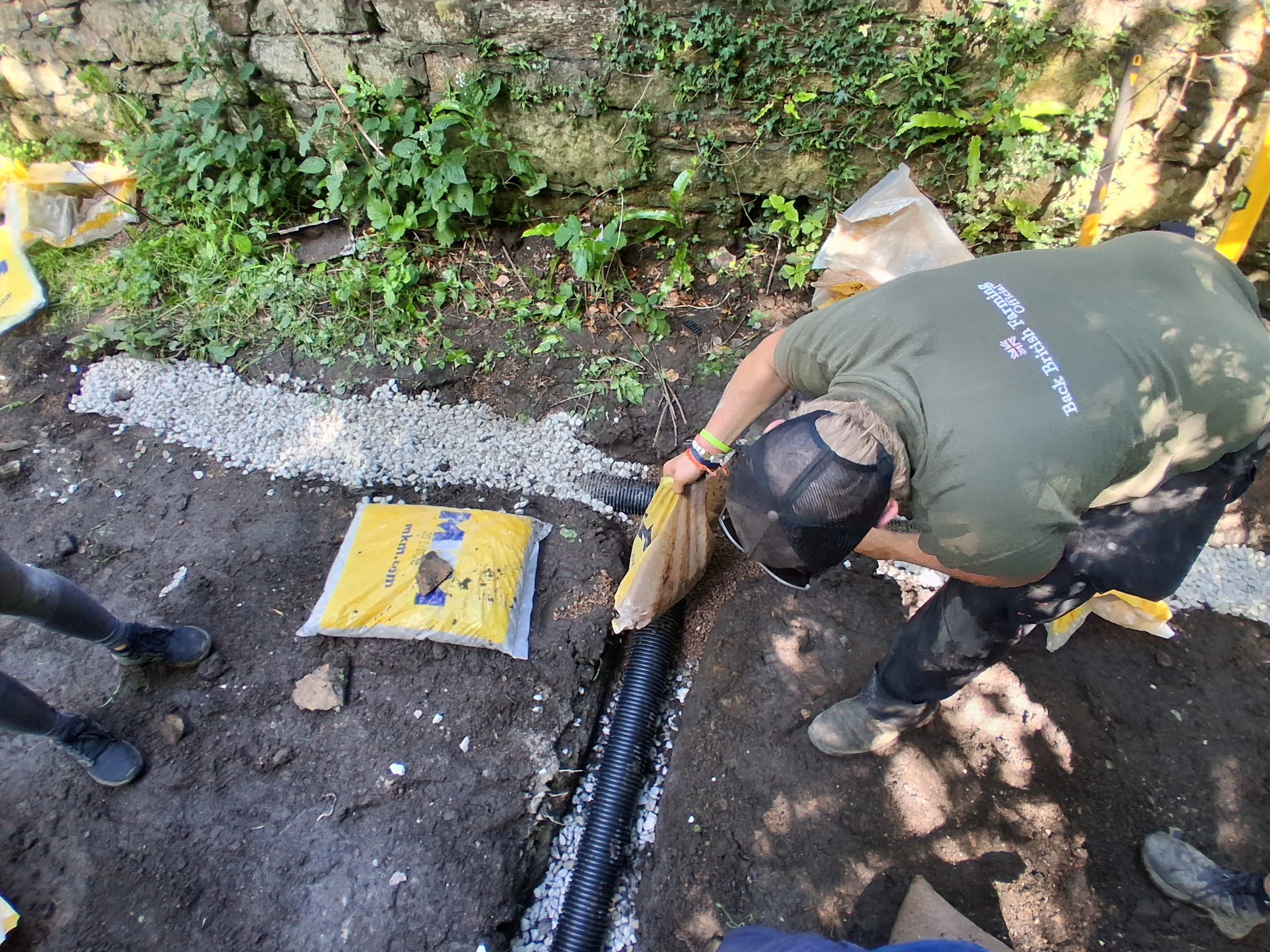
Rown and the other Apprentices working on drainage on a new Watery Walk footpath project
Rowan
We went over to Distington to work on the new Watery Walk and do some path improvements. We came across a rather wet patch, so we decided the best fix was to put a boardwalk over it.
First up, we had to haul the timber over, which included four sleepers and half a dozen 4x4 posts. We laid two sleepers side by side with a spacer in between, then drilled holes for bolts to connect them together at either end. Running the bolts through proved pretty tricky unless the holes were drilled absolutely perfectly - which, of course, they weren't! They needed a bit of convincing with a hammer to get through. Once they were in, we attached a post to the bottom on both ends to keep the sleepers up out of the mud and water.
We did that process twice and laid the two sections end to end to create a proper 12-foot boardwalk. To stop it from shifting, we drove short posts into the ground on either side - eight in total, with four on each section - and fastened them to the sleepers using lag screws.
All in all, I really enjoyed the day and the challenge of making it all work. Seeing a sturdy path over what was just mud a few hours ago is a great feeling!
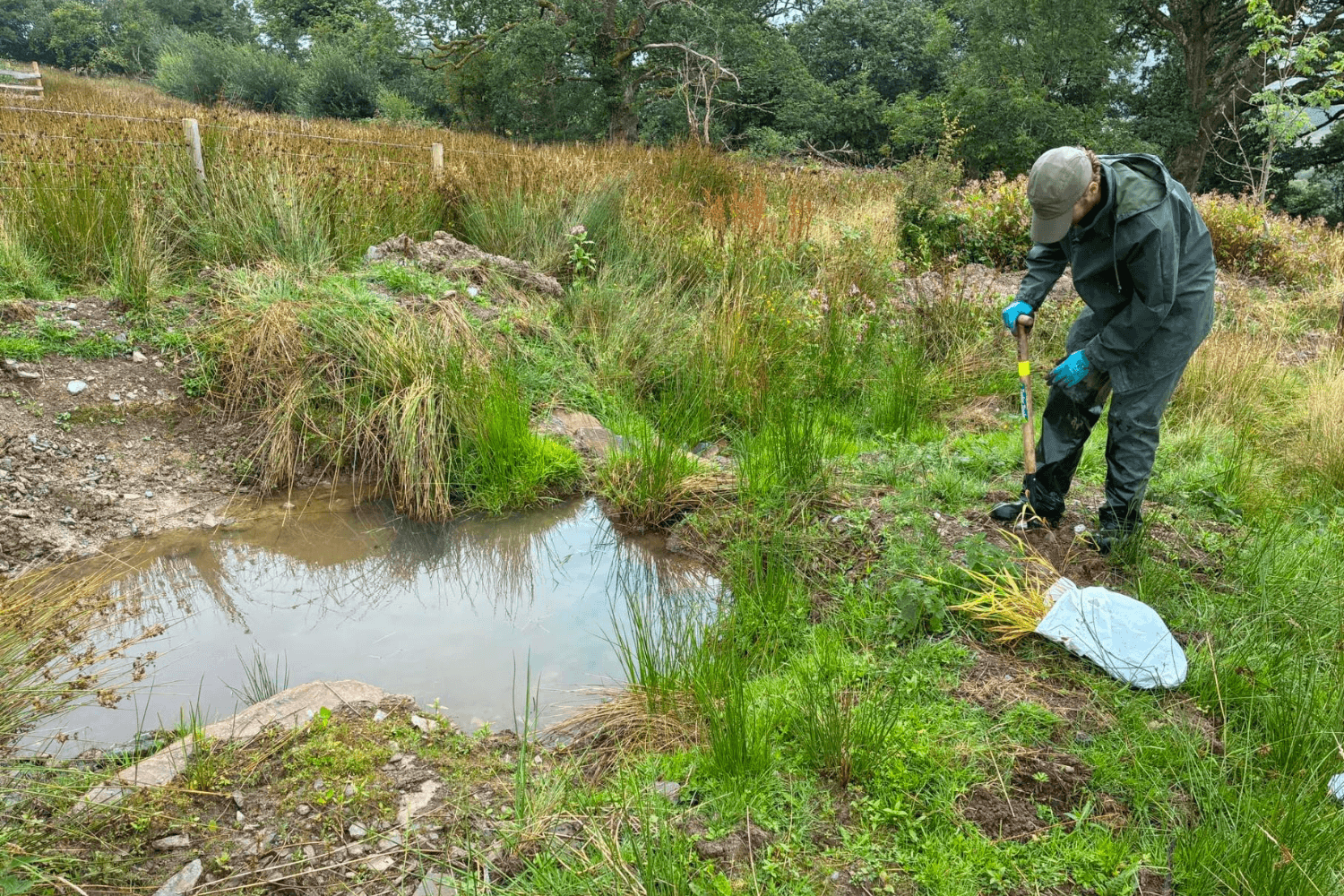
Planting reeds around the water’s edge in Loweswater
Brooke
This month we spent a day at Loweswater carrying out practical conservation work, including planting reeds around the water’s edge and strimming Himalayan balsam. It was a good chance to work in a different habitat and get some hands-on experience with managing vegetation around the water.
I enjoyed the variety of the day, particularly getting stuck into the reed planting and seeing how the work we were doing could help improve the habitat over time. It was another useful day of getting practical experience and learning more about the different types of work involved in conservation.
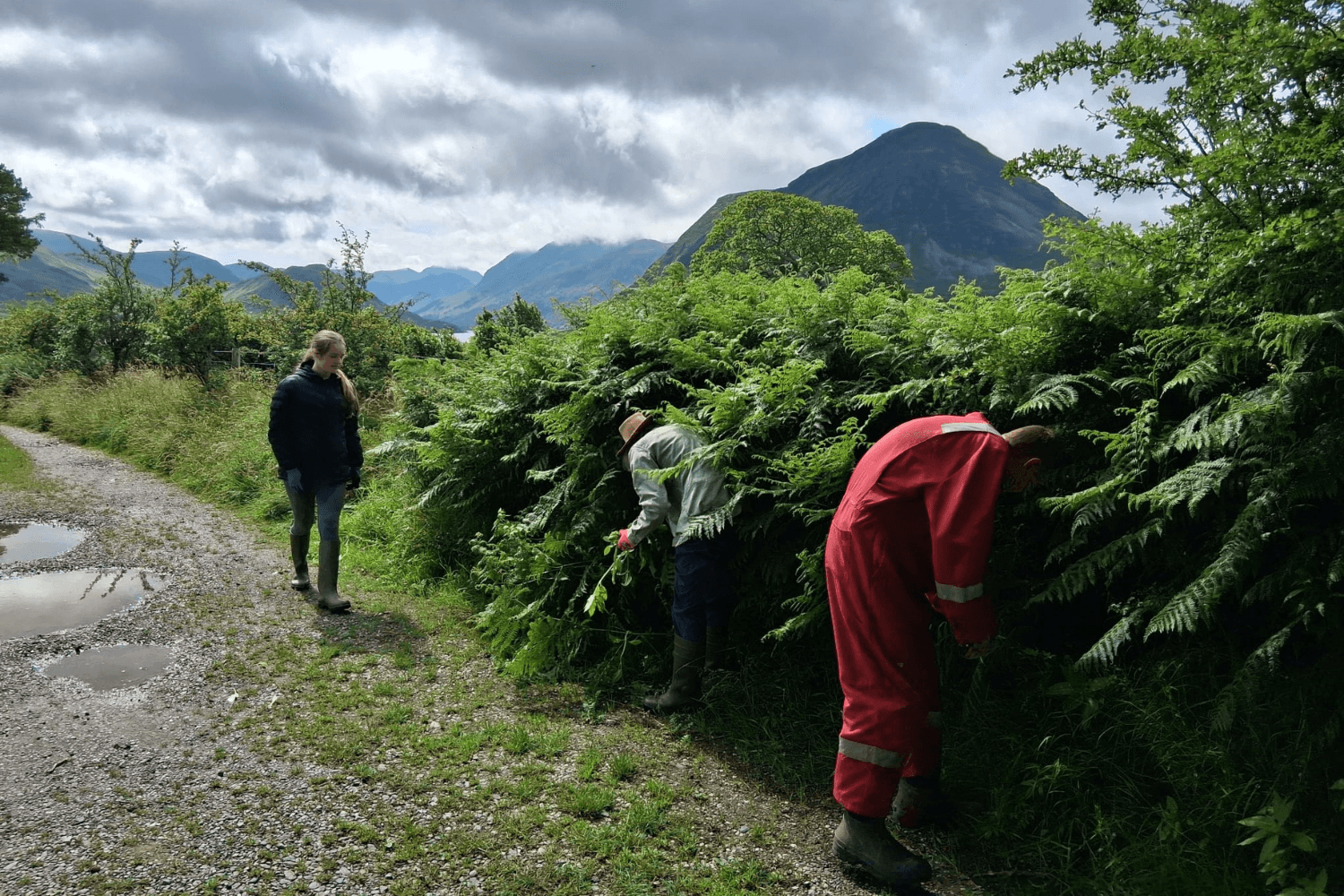
Daniel undertaking a balsam bash
Daniel
Over the past few weeks, we’ve really been bashing down the Himalayan balsam as the season slowly comes to an end. We’ve had some great groups of volunteers helping out, and although there is still a lot of balsam around, we’re starting to see the impact we’re making. I went back to a site where I did my work experience with WCRT about three years ago, when we were also balsam bashing, and it was nowhere near as overgrown as it used to be. It was great to see that we really are making a difference.