
Meet Walkmill’s Apprentices
Three months in, we caught up with Walkmill’s Apprentices to see how they’re faring and what’s exciting them.
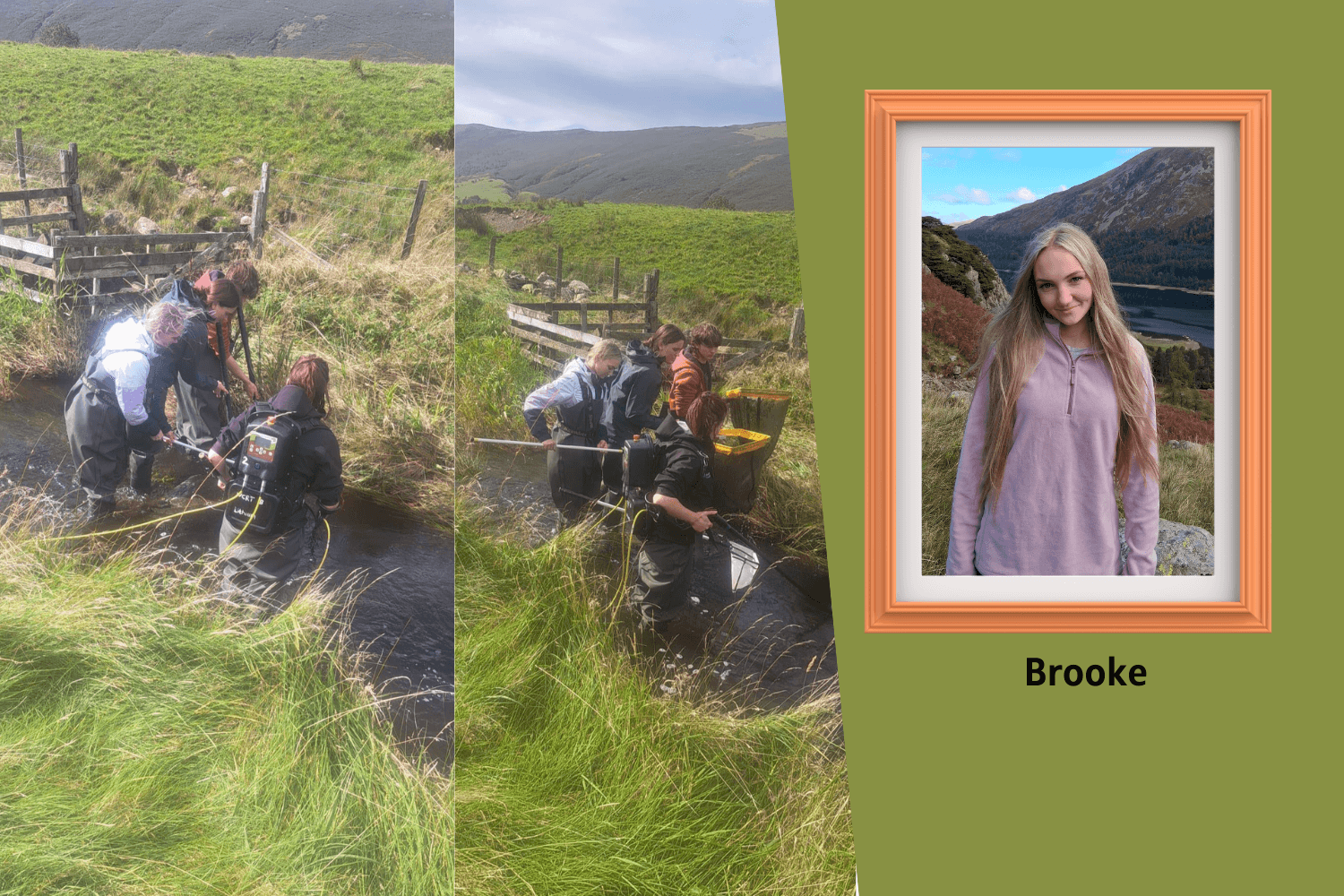
Brook electrofishing
Name: Brooke Morfoot
Age: 16
One of the biggest highlights of my apprenticeship so far has been electrofishing. Before I tried it, I thought it might be scary or complicated, but once I started, it was really exciting. Being by the water with the equipment and working as part of a team felt amazing, and seeing fish appear right in front of me was honestly so cool. It’s the kind of experience you rarely get, and it made me realise how important this work is for rivers and wildlife. Some parts were tricky, like moving through the water without slipping, but with everyone’s help, it wasn’t as hard as I expected. Instead of feeling stressed, I felt confident and curious, doing something that mattered. It reminded me why I wanted to work outdoors and made me excited for everything else I’ll learn.
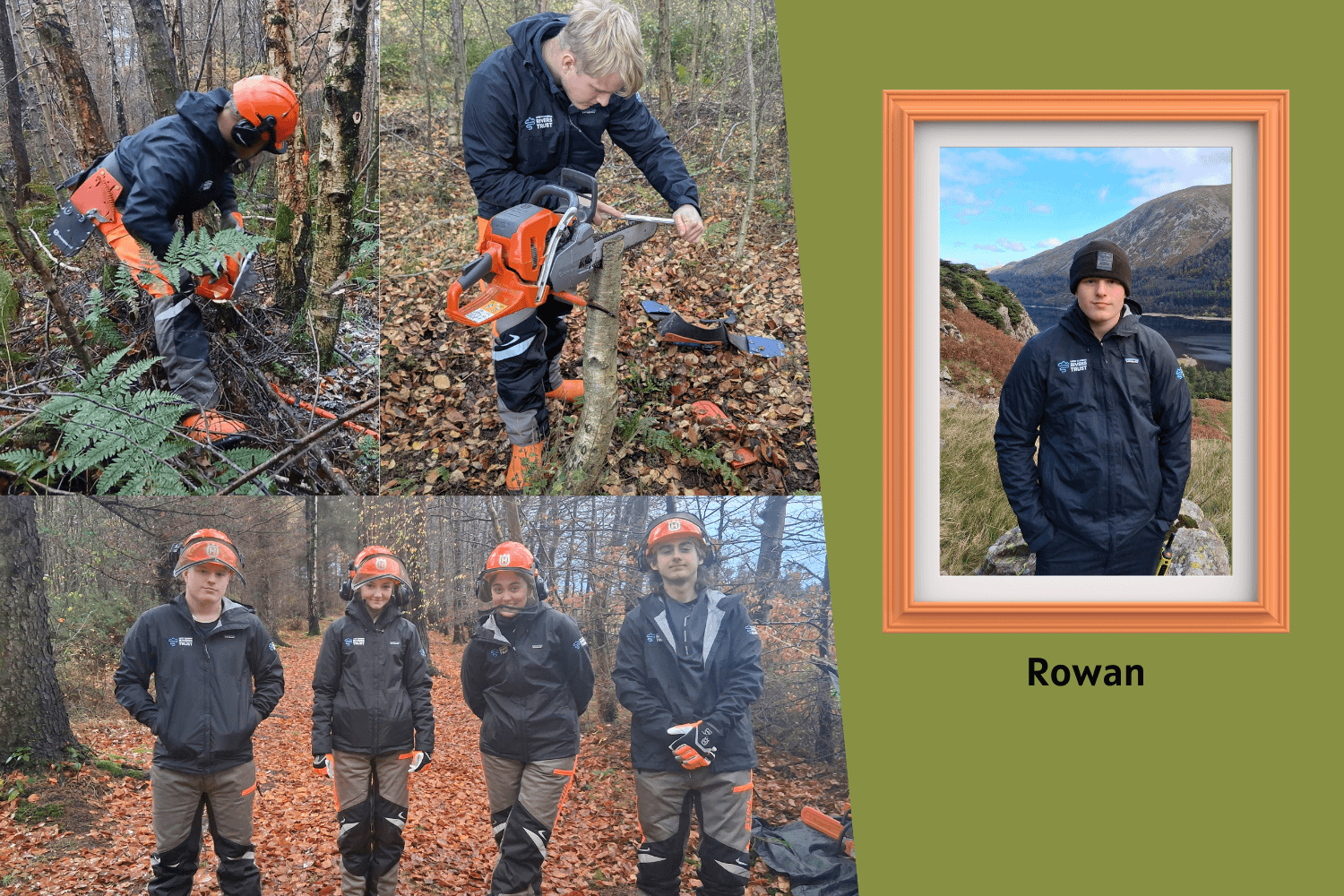
Rowan on a chainsaw course
Name: Rowan Charlesworth
Age: 16
I’ve really enjoyed my five-day chainsaw course. On day one we covered safety and maintenance. One of the best parts was learning how to take the chainsaw apart and access things like the bar, spark plug, air filter, sprocket and pull cord, and how to correctly maintain all the parts.
Over the next four days we learned how to safely start the chainsaw and carry out pre-start checks. On the first practical day we each felled one tree. On the second day we practised basic felling cuts and processing timber into 3 m lengths. At the end of that day, we were taught how to do a felling bar cut, which we continued practising on day three, along with trying corner cuts and a dog’s tooth. On the fourth day we were left to practise our cuts ready for the test.
Altogether, it was one of my favourite weeks so far. I’ve already used my new skills at Walkmill, coppicing willow, creating habitat piles with the brash, and using larger logs to build leaky dams to help establish new wetland areas. I’ve also used the chainsaw at Rolling End, where we were hedge laying, coppicing, pollarding and carrying out tree reduction to make the area more wildlife friendly, while also creating livestock barriers and protecting coppice stumps from grazing.
Using a chainsaw to improve the environment has been one of my favourite parts of the apprenticeship, and I’m really looking forward to building on this experience.
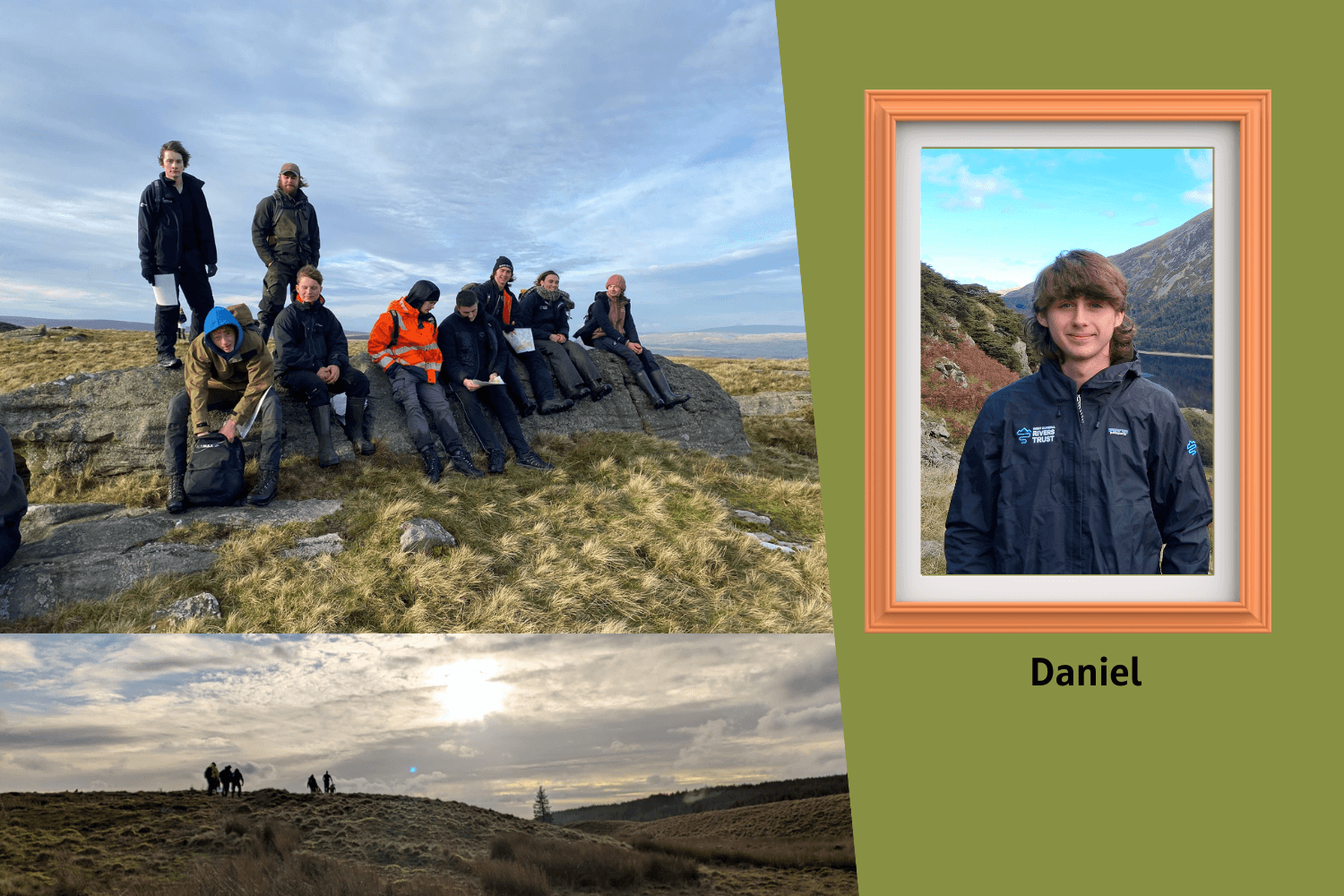
Daniel orienteering
Name: Daniel Whitehead
Age: 17
Our last college day was a full navigation day on the moors near Settle, and it was a lot harder than I expected. Using maps and compasses, we had to navigate between different points across the area, covering about seven miles in total. With the size of the group, it ended up being quite a long day.
At the start I didn’t feel very confident. Keeping a bearing while reading the map wasn’t easy, and when you’re standing in the middle of nowhere trying to line everything up, it really shows how challenging navigation can be. We were lucky to have clear weather, though. A few times we thought we were right and then realised we were slightly off, but as the day went on it started to make much more sense. It was really rewarding to walk over a rise and see the point we’d been aiming for right in front of us.
Even though it was tiring, it was a day we all enjoyed. We crossed open fields, woodland, uphill sections, and a lot of bog and wetland. It felt good to be properly using maps rather than just learning about them in a classroom. You also realise how important navigation is for the job. You can’t just guess where you are. By the end of the day we were all exhausted, but it was probably one of my favourite college days so far and left me feeling much more confident.
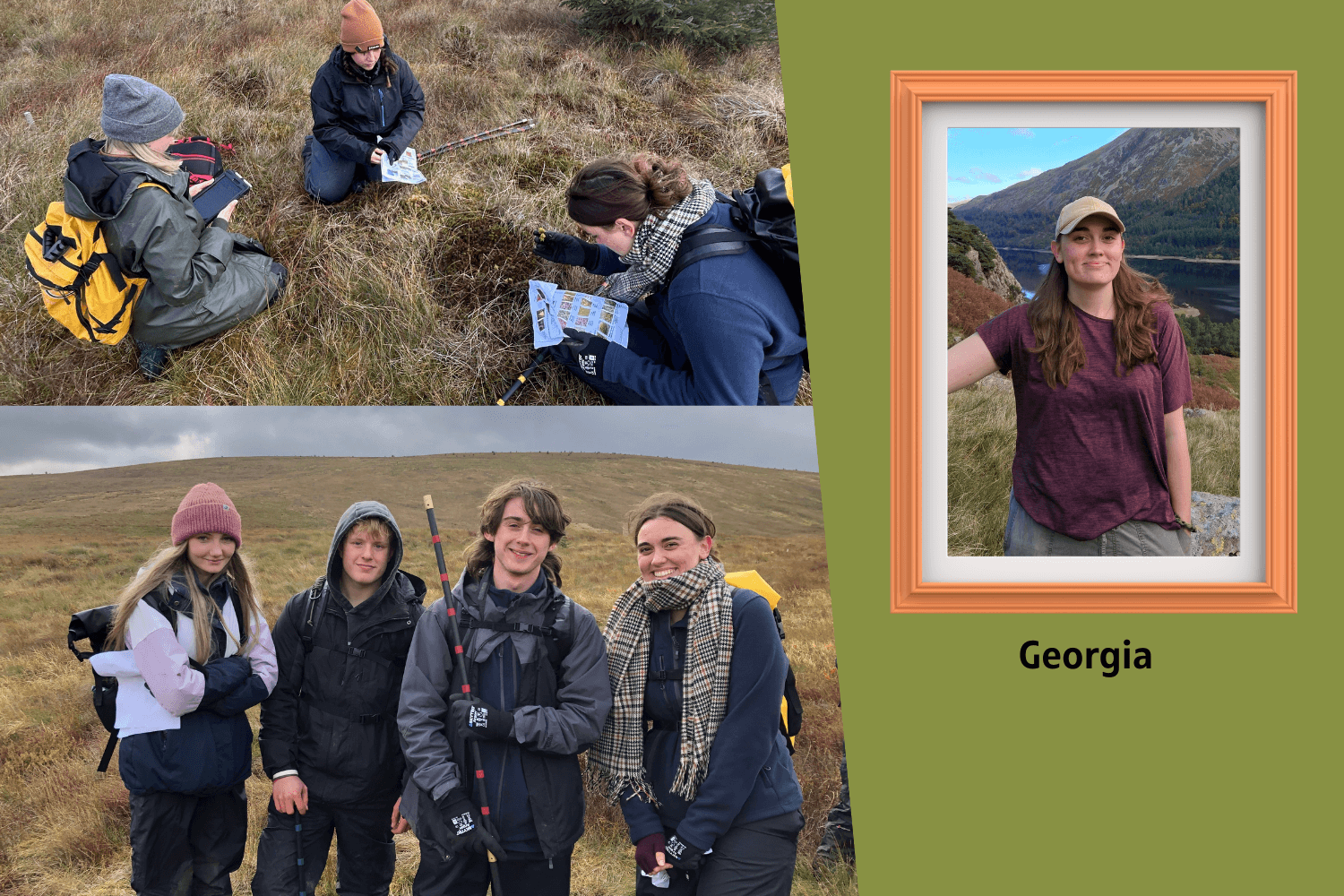
Georgia on the peatland
Name: Georgia Joyce
Age: 24
One of my highlights so far has been the Peatland Pathway course delivered by the Yorkshire Peatland Partnership. Having not thought much about peat bogs before, it was eye-opening to learn how such an unassuming habitat plays a crucial role in combating climate change through carbon storage, biodiversity and natural flood management.
During the course we visited two peatland sites: one restored and one in need of restoration. The unhealthy peatland was heavily dominated by grass species, with large areas of dark, exposed peat. It was sad to realise this matched what I’d previously thought peatland was meant to look like, and it highlighted just how little good quality peatland remains.
At the restored site, we carried out quadrat surveys on a healthy blanket bog. There was far greater plant diversity, from bog asphodel and sundew to sphagnum mosses, which are key indicator species of a thriving peatland. Differentiating between sphagnum species was tricky, and I can’t say I know my papillosum from my palustre, but it was still fascinating to explore the habitat at both a micro and macro scale.
I really enjoyed the mix of practical and classroom learning, and peatland restoration is something I’d be keen to explore further later in my career.