
Apprentice’s April Blog
Apprentice update, learning by doing across farms, woodlands and communities
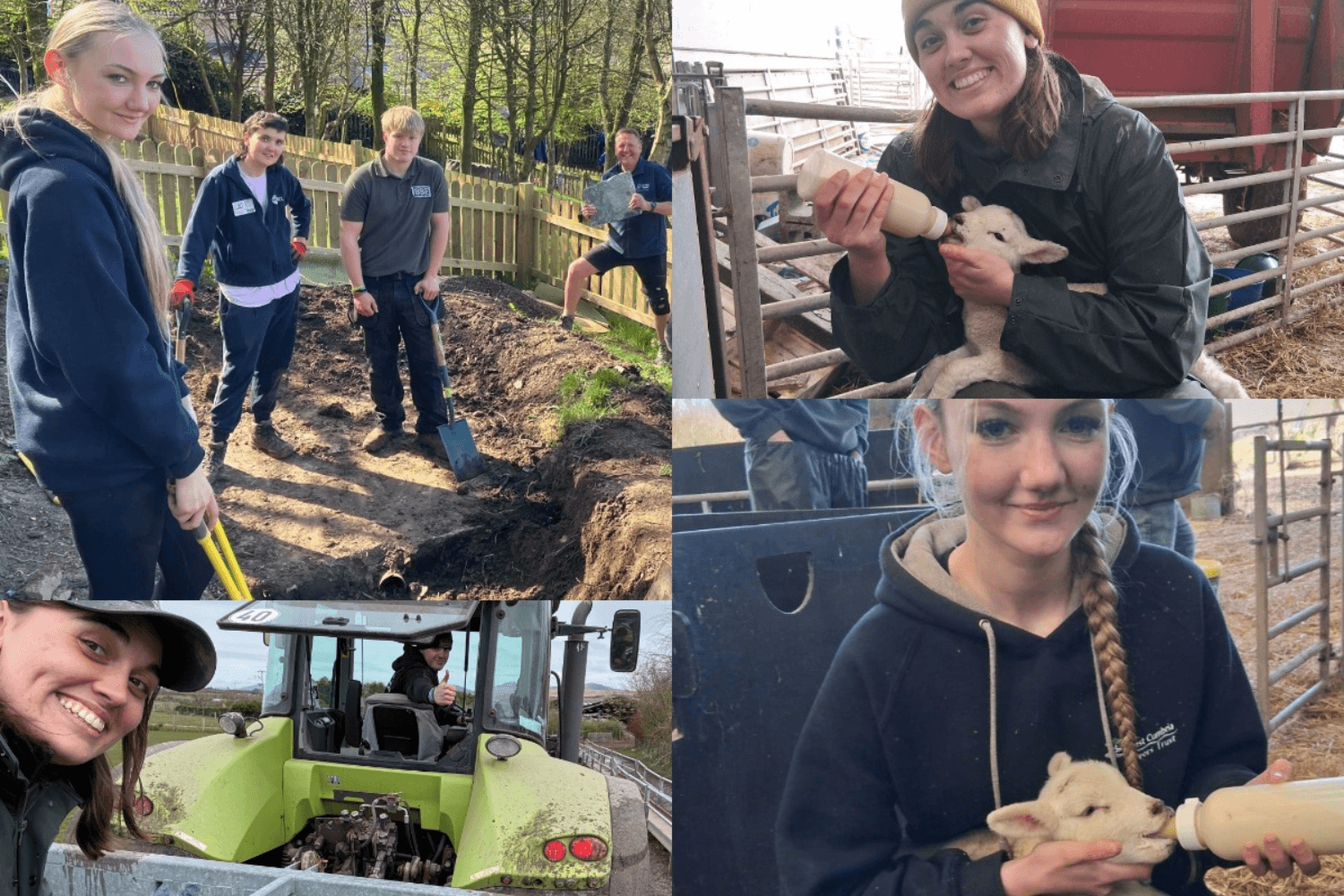
Apprentices hard at work over April
The past few weeks have offered a rich and varied experience for our apprentices, with time spent across working farms, woodland sites, education settings and conservation projects. From early mornings in lambing sheds to practical countryside skills at Walkmill and habitat work in schools and valleys, the programme continues to build confidence, knowledge and real-world experience.
Daniel
Daniel has been gaining valuable experience at Fairfield Farm during lambing season, supporting the day-to-day care of ewes and newborn lambs. Lambing is one of the most intensive periods in the farming calendar, requiring constant attention and quick decision making to ensure the health and welfare of both sheep and lambs. Through this, Daniel has developed a strong appreciation for the level of care involved and the importance of working efficiently as part of a team.
Alongside this, he’s been working at Walkmill where he’s taken part in woodland management tasks, including chainsaw work to clear areas and prepare materials for site improvements. One particularly memorable task was learning how to make a wooden mallet from a single strip of wood. This practical exercise required patience and precision, and although challenging, it was a rewarding process that highlighted the value of traditional countryside skills.
Rowan
Rowan has also been supporting lambing at Fairfield Farm, gaining hands-on insight into livestock care and the demands of farm work during a busy seasonal period. This experience has helped build confidence and understanding of how farming and conservation intersect, particularly when planning work around key times such as lambing.
In addition, Rowan has been involved in practical work at Walkmill, including making wooden mallets and supporting site tasks. A highlight has been contributing to a pond creation project at a primary school that’s taking part in West Cumbria River Trust’s Greener Grounds programme. This involved digging out the final sections of the pond, laying protective materials such as old carpet to prevent damage, installing the liner, and helping to fill and finish the pond with stone edging. The result is a new habitat that will support wildlife and provide a valuable learning resource for pupils.
Brooke
Brooke has experienced a wide range of activities over recent weeks. Her time at Fairfield Farm during lambing has provided a deeper understanding of the farming calendar and the level of care required during this critical period. Tasks have included checking livestock, supporting feeding, and helping ensure that lambs are healthy and thriving.
Her college sessions have focused on completing dry stone walling projects and learning about environmental designations, helping to link practical skills with a broader understanding of conservation policy and land management.
At Walkmill, Brooke has been involved in a variety of site-based tasks, including fencing repairs, splitting wood for steps and crafting a wooden mallet. She has also supported pond preparation work at a local school, helping to install a liner and prepare the site for habitat creation. Through these experiences, Brooke has developed both practical skills and an understanding of how different elements of conservation work come together.
Georgia
Georgia has been actively involved in education and outreach, supporting Wilder Walkmill sessions with local primary school groups. These sessions explore the heritage of the site and its development, helping young people connect with the landscape and understand its importance.
She’s also taken part in habitat management work, including preparing areas in Ennerdale for wildflower planting. This provided an opportunity to practise strimming skills and contribute to the creation of new habitats that will support biodiversity.
A recent training highlight was attending an Introduction to Birds course delivered by the Cumbria Biodiversity Data Centre. This session introduced key bird identification skills, which Georgia is keen to continue developing as the breeding season progresses.
In addition, Georgia has continued to build her confidence in traditional skills through dry stone walling sessions at college, working towards constructing stable and well-built walls.
Building skills for the future
Across all apprentices, the past few weeks have demonstrated the value of learning through hands-on experience. Whether working with livestock, managing woodlands, creating habitats or engaging with local communities, each activity contributes to a broader understanding of conservation in practice.
These experiences not only develop technical skills but also build teamwork, adaptability and an appreciation of how landscapes are managed across different contexts. From lambing sheds to woodland paths and school grounds, the apprentices are gaining a well-rounded foundation for future careers in conservation and land management.